


In the ’80s, Patrick Dempsey was a teen-comedy star, thanks to his lead roles in Can’t Buy Me Love and Loverboy. But like a lot of other ’80s teen stars, Dempsey struggled to transition to adult roles and more dramatic fare, and in the ’90s he drifted through sporadic TV guest appearances and small roles in movies. All that changed in 2005, when he was cast in the medical drama Grey’s Anatomy. His role as “McDreamy” led to renewed status as a sex symbol, and leading roles in movies like Enchanted and Made of Honor.
 Kurt Warner
Kurt Warner ascended to the top of the football world in 2000, leading his St. Louis Rams to a Super Bowl XXXIV win following a regular season that saw the undrafted quarterback-turned-Arena League star capture the NFL’s MVP award. Warner won his second MVP trophy in ’01, then lost his starting job in St. Louis, spent one uneventful season with the Giants and wound up in NFL purgatory Arizona as a backup. But this year, the 37-year-old racked up 4,583 yards and 30 touchdowns while leading the Cards to a spot in this week’s NFC Championship.
 John Travolta
Coming off iconic roles in Saturday Night Fever, Grease and Urban Cowboy, a young John Travolta was primed to be the next great movie star. Then he turned down a string of parts in ’80s films that became hits, acted in a string of ’80s movies that were awful and by 1994 was all but forgotten. But his performance as hitman Vincent Vega in Pulp Fiction catapulted Travolta back to the ranks of the cool (and bankable).
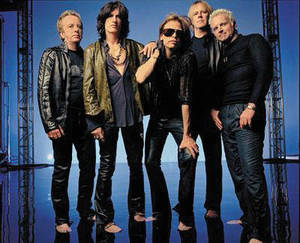 Aerosmith.
Think the mighty Aerosmith has always been on top of the rock world? Not so. After burning up the charts with all-time radio staples like “Sweet Emotion,” “Dream On” and “Walk This Way,” Steven Tyler, Joe Perry & Co. sank into steep decline during the late ’70s and early ’80s, going 10 years without a top 20 hit (and even releasing one LP sans Perry’s guitar work). But in 1987, “Dude (Looks Like a Lady)” pushed Aerosmith to No. 14 and back into the spotlight, for good. The band has had more top 25 singles since “coming back” (13) than during its glory years (four).
 Marilynne Robinson
American author Marilynne Robinson went 24 years between her first novel, 1980’s Housekeeping and her second, 2004’s Pulitzer Prize-winning Gilead. In between she taught and published a collection of essays, while pretty much everyone wrote her off.
 Marlon Brando
Marlon Brando delivered several tour-de-force performances in the 1950s that redefined screen acting, including A Streetcar Named Desire, On the Waterfront and The Wild One. But by the end of the ’60s, after he accumulated a string of forgettable roles, many felt the legend had pissed away his immense talent. Francis Ford Coppola had to fight to get him cast as Vito Corleone, and thankfully so: Brando’s turn in The Godfather in 1972 preceded another towering mid-career performance, his turn as the emotionally ravaged Paul in Last Tango in Paris. The films helped restore his reputation as the actor against whom all American actors are measured.
 Tina Turner
After years of success with Ike Turner, culminating in their 1971 barnhouse-burning cover of Creedence Clearwater Revival’s “Proud Mary,” Tina Turner endured a legendary nosedive that included an escape from an abusive marriage and appearances on shows such as Hollywood Squares and The Brady Bunch Hour. Then, out of nowhere, 1984’s Private Dancer scored the 44-year-old her first U.S. No. 1 hit, “What’s Love Got to Do With It.” The Queen of Rock ’n’ Roll was back.
 David Caruso.
In a fitting bit of irony, in 1995 bomb Kiss of Death, David Caruso intones, “What did you do? What did you dooooo?” That’s exactly what fans were asking when he stuck his nose up at ABC for making him the hottest actor in the country on NYPD Blue in 1993, leaving to pursue perhaps history’s most misguided movie career. The TV public proved forgiving, welcoming him back with open arms on CSI: Miami in 2004.
 Marion Barry
“I’ll be goddamn. Bitch set me up,” Marion Barry said on January 18, 1990. Barry, mayor of Washington, D.C., at the time, was speaking about his ex-girlfriend, the key figure in a sting operation by the FBI and the D.C. police. FBI recordings showed the obscenely guilty Barry lighting up a glass pipe and smoking crack. Barry served six months in prison, but was elected to a city council seat in 1991 and, stunningly, returned to the mayor’s chair in ’94. He is still a member of the D.C. city council.



Previous Discussion: