

Fragments of conversation in English and Chinese filtered through the darkened Donna Beam Gallery as guests explored the labyrinth of digital projectors and flat-screens displaying cutting-edge Taiwanese video art.
Extreme Sensibilities, curated by Charles Liu, is the technological jewel of three exhibits showcasing Chinese art on the UNLV campus, and features 17 video works by 15 artists.
The exhibit’s title translates into Chinese as “hot and cold face,” which is the experience the viewer encounters as the works seem to alternate between heating up the senses (Hui-Yu Su’s video of nude female models rigged, suicide bomber-style, with red paint bombs exploding in slow motion) and cooling them down (Guan-Ming Lin’s swimmer gliding backward through an emerald river).
Noticing a link between these video works and Chinese art of the past, UNLV Asian studies professor Aya Louisa McDonald says, “As an art historian I can’t help but see the past remade in the present. Despite the modern themes and technology, I am reminded of time-based media in ancient Chinese art. Buddhist painting, for instance, utilized a fixed format, not unlike the monitor, to present multiple events that had occurred at different times as if they shared the same physical space.”
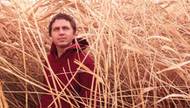
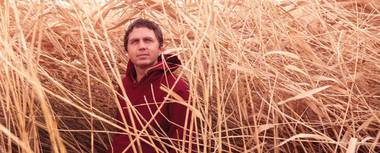
“It’s like a seed coming out of his head!” a startled guest blurted, coming upon artist Chen Yung-Hsien’s piece. Head on a Plate shows the artist’s own shaved head going through different transformations, including grass growing on it, being inscribed with Chinese text and floating in the River Thames like a bizarre water lily.
Guests were amused by artist Tsui Kuang-Yu’s video of outdoor bowling with pigeons in the city of London, intended to “create a ridiculous narrative intertwined with the normal,” while others pointed fingers of curiosity toward Wang Yan-Hui’s video in which a mysterious small cloud travels through the house of the artist’s grandfather. Henderson resident and Taiwan native Leslie Ltsu remarked that Yan-Hui’s was her favorite “because of the reference to family and the old buildings I remember in Taiwan. It was very homey.”
A few steps away, artist Tu Pei-Shih, the only Taiwanese artist able to attend the opening, photographed visitor reactions to her frame-by-frame animated work. Motivated by a news photo of the sumptuous feast prepared for a G8 summit on global hunger, Pei-Shih’s piece, Who Cares About the Real, depicts an animated feast of collaged guests enjoying themselves amid a rain of lobsters, wine and suckling pigs, while below them murders and protests occur, and hunger victims walk by unnoticed.


Previous Discussion: